

Designing an ASTM F3101 Compliant Outdoor Fitness Site
ASTM F3101 is the American Society for Testing and Materials (ASTM) standard governing the design, safety, and structural integrity of outdoor fitness equipment installed in public spaces such as parks, recreational areas, and fitness trails. Designing a compliant site means aligning six things with the standard: a thorough site assessment, ASTM F3101-compliant equipment, correct layout and clearance spacing, safety surfacing rated to each unit’s fall height, proper installation and maintenance, and clear signage. Getting these right keeps users of all ages and abilities safe — and protects the community’s long-term investment.
In recent years, outdoor fitness sites have gained popularity as communities strive to promote healthy lifestyles and physical activity. However, ensuring the safety and well-being of users is of paramount importance when designing such spaces. ASTM F3101 is a set of comprehensive guidelines developed by the American Society for Testing and Materials (ASTM) to ensure the safety, structural integrity, and overall quality of outdoor fitness equipment. These standards are specifically designed to standardize the design, construction, and safety of fitness equipment installed in outdoor settings, such as parks, recreational areas, and fitness trails. In this blog post, we will take you through the process of designing an ASTM F3101 compliant outdoor fitness site, covering key aspects such as equipment selection, layout, safety considerations, and more. Let's embark on this journey of creating a safe and enjoyable outdoor fitness space for your community.
 Understanding ASTM F3101 Guidelines
Before we delve into the design process, it is crucial to understand the ASTM F3101 guidelines thoroughly. These standards cover a wide range of factors, including safety requirements, clearance spaces, entrapment hazards, equipment weight capacity, labeling, and more. Familiarizing yourself with these guidelines will serve as the foundation for creating a safe and compliant outdoor fitness site that can be enjoyed by people of all ages and abilities.
Site Assessment and Selection
The first step in designing an ASTM F3101 compliant outdoor fitness site is to conduct a comprehensive site assessment. Consider the location, size, and accessibility of the site. Ensure that the area is level and has proper drainage to prevent water accumulation around the equipment. Additionally, assess the soil conditions to determine the appropriate foundation for the fitness equipment.
Take into account the demographics of the community and potential users of the fitness site. Consider the needs of children, seniors, and individuals with disabilities to ensure inclusivity. Choosing a location that is easily accessible and visible encourages greater use and engagement — a key reason parks and recreation departments plan fitness zones along existing walking trails, near playgrounds, and beside community hubs.
Choosing ASTM F3101–Compliant Equipment
Selecting ASTM F3101–compliant fitness equipment is paramount to user safety. Seek out equipment from reputable manufacturers who adhere to the standards and provide clear documentation on safety features, weight capacity, and installation requirements. Look for equipment that offers multiple exercise stations and adjustability to accommodate users of different fitness levels.
This is also where the distinction between real fitness equipment and decorative “adult-playground” pieces matters most. Outdoor-Fit builds equipment around real exercise biomechanics — commercial-grade multigyms, calisthenics rigs, cardio, and strength stations engineered for genuine, progressive workouts rather than novelty movement. Every unit is designed to be tamperproof, weatherproof, and ADA-accessible, so a single site can serve wheelchair users, seniors, and athletes alike.
Consider the variety of equipment available — multigyms, calisthenics and functional rigs, cardio, and strength stations — and include options that accommodate wheelchair users so everyone in the community can participate.
Layout and Spacing
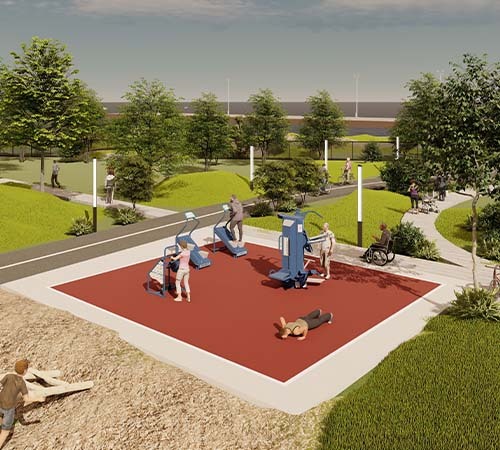
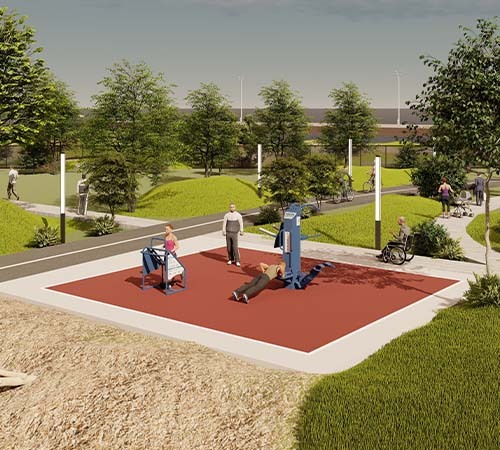
The layout and spacing of the equipment are essential for user safety and convenience. Follow the ASTM F3101 guidelines on clearance space to give users enough room to perform exercises comfortably without the risk of collisions or entanglement hazards. Pay attention to the arrangement of equipment to create a logical flow throughout the site.
Ensure there is adequate space for users to move freely between stations and that the site accommodates individuals with disabilities. Placing equipment to allow smooth circulation and easy access enhances the user experience and supports users of all abilities — ADA-accessible spacing is a compliance requirement, not an afterthought.
Safety Surfacing
ASTM F3101 emphasizes the importance of safety surfacing to minimize the impact of falls and reduce the risk of injuries. Install appropriate safety surfacing — such as rubber tiles, poured-in-place surfacing, or shredded rubber mulch — beneath and around the equipment. The surfacing must comply with the fall-height requirements specified by the equipment manufacturer.
Proper safety surfacing not only protects users from potential injuries but also provides a clean, comfortable environment for exercising. Inspect the surfacing regularly for wear and tear, and ensure it remains in good condition throughout the equipment’s service life.
Installation and Maintenance
Proper installation is vital to structural integrity and user safety. Follow the manufacturer’s installation instructions and use recommended fasteners and anchors. Ensure the equipment is correctly secured to the ground to prevent tipping or movement during use.
Create a comprehensive maintenance schedule that includes routine inspections, lubrication, and repairs as needed. Regular maintenance helps you identify potential hazards or signs of wear early, so you can address issues promptly and keep the environment safe. Because Outdoor-Fit equipment is engineered for unsupervised public use — weatherproof finishes, tamperproof hardware, and low-maintenance components — many installations deliver dependable service for 20+ years with minimal upkeep, which is exactly the kind of long-term value public budgets are accountable for.
Signage and Labeling
Clear signage and labeling are essential components of an ASTM F3101–compliant outdoor fitness site. Each exercise station should display clear instructions and safety guidelines. Warnings and instructions posted at each station give users essential safety information, and all signage should comply with ASTM F3101 and be easily visible to every user.
Proper signage and labeling enhance user safety and educate users about correct equipment use and potential risks. Check signage regularly to ensure it remains legible and in good condition. Some communities extend this guidance digitally — for example, pairing on-site labels with app-based instruction so users can follow guided workouts on their own devices.
Engage with the Community
Engaging the community during the design process leads to a more successful outdoor fitness site. Seek input from residents, fitness enthusiasts, and local authorities to understand their needs and preferences. Involving the community fosters a sense of ownership and ensures the site serves the specific needs of its users.
Community engagement also helps identify areas for improvement and gathers valuable feedback to enhance the design and functionality of the site. For inspiration, browse real Outdoor-Fit park installations to see how other municipalities structured their fitness zones, funded them, and rolled them out.
From Compliance Plan to Installed Park
A compliant design is the goal; a funded, installed, well-used park is the outcome. Outdoor-Fit has helped communities across North America move from plan to opening day since 2003, backed by 40+ years in the commercial fitness industry and 700+ installations. Qualifying municipalities can purchase through Sourcewell — the cooperative purchasing program that satisfies competitive-bid requirements — and may access the Fit-City Discount Program.
Our How to Buy resources walk you through specification, layout, funding, and installation, and our dealer network supports you locally from first sketch to final anchor bolt.
With a well-designed and safe outdoor fitness space, you can contribute to the well-being and health of your community for years to come. The effort invested in a compliant fitness site is rewarded with a thriving, engaging, and enjoyable outdoor space that fosters a culture of fitness and wellness. Compliance with ASTM F3101 ensures your equipment meets industry-wide safety standards, letting you create inclusive fitness spaces for users of all ages and abilities.
To review the full standard, you can purchase the ASTM F3101 guide directly from ASTM’s website.
Planning an outdoor fitness park?
Explore Outdoor-Fit’s Parks & Recreation solutions to see ASTM-compliant, ADA-accessible equipment built for real exercise — or start your project with our How to Buy guide.
Frequently Asked Questions About ASTM F3101 Outdoor Fitness Sites
ASTM F3101 is the standard developed by the American Society for Testing and Materials that governs the design, structural integrity, and safety of unsupervised outdoor fitness equipment. It defines requirements for clearance spacing, entrapment hazards, weight capacity, labeling, and more, so that equipment installed in parks and public spaces is safe for users of all ages and abilities.
No. Playground standards (such as ASTM F1487) cover play structures for children, while ASTM F3101 covers outdoor adult and multi-generational fitness equipment intended for real exercise. Because the two serve different purposes, fitness zones and playgrounds are specified and inspected against different standards even when they sit side by side in the same park.
ASTM F3101 addresses equipment safety; ADA governs accessibility. A well-designed site meets both — with accessible routes, clearances, and at least some equipment usable from a wheelchair. Outdoor-Fit designs ADA-accessible equipment so a single installation can serve the whole community. See our Parks & Recreation solutions for examples.
Many US municipalities purchase through Sourcewell, a cooperative purchasing program that satisfies competitive-bid requirements, and qualifying communities may access the Fit-City Discount Program. Grants, capital budgets, and community fundraising are also common. Our How to Buy guide outlines the full path from plan to opening day.